
Book An Appointment
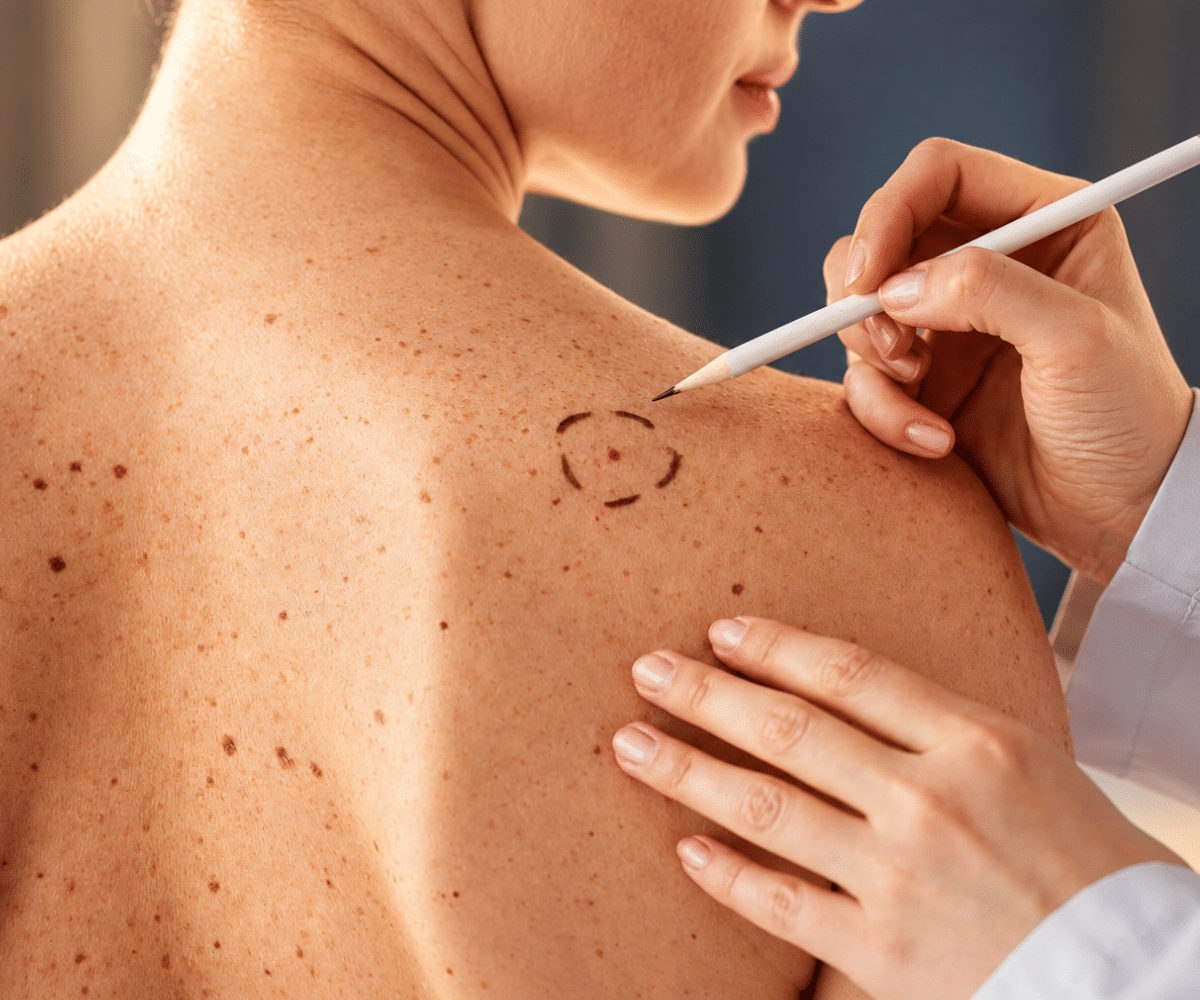
You may be dealing with a new mole, a lesion changing in size or colour, or a spot that looks different from the others. It is reasonable to want clear answers before committing to a treatment.
At Dermacare Dubai, we first examine your concern, discuss your history and explain which options are appropriate for you.
Medical examination of pigmented and non-pigmented lesions, with monitoring or investigation where indicated, can help shape a practical plan, with realistic expectations about results and follow-up.
Medical examination of pigmented and non-pigmented lesions, with monitoring or investigation where indicated, is the starting point for this service.
The right approach depends on the diagnosis, your medical history, skin or hair characteristics and the outcome you hope to achieve.
Some concerns can be managed conservatively. Others may benefit from medication, a procedure or monitoring. Your clinician should explain the reason for any recommendation and its limitations.
An assessment may be appropriate for:
✓ New skin lesions
✓ Changes in mole size or colour
✓ Asymmetry or irregular borders
✓ Bleeding or crusting lesions
✓ Spots that itch or evolve
✓ Personal concern about skin cancer
Having one of these concerns does not automatically mean you need a procedure. The examination determines whether treatment is appropriate and what should be considered first.
Discuss changes, sun exposure and relevant personal or family history.
Use clinical examination and dermoscopy where appropriate.
Discuss monitoring, photography, biopsy or referral if needed.
Record findings and advise when to return or seek urgent review.
The exact pathway depends on your findings. Your clinician will explain relevant precautions, expected recovery or monitoring needs before proceeding.
Identify lesions that need further investigation.
A suspicious mole should not be treated with a cosmetic laser.
Documented review can help assess evolving lesions.
Know when monitoring is enough and when biopsy may be needed.
Your symptoms, history and examination guide the next step, rather than a predetermined procedure.
For you: You can understand why a particular treatment is being recommended.
Medical treatment, observation or a different procedure may be more appropriate than the first option you considered.
For you: You can compare choices instead of feeling pressured into one route.
Potential benefits are discussed alongside side effects, recovery and the possibility of an incomplete response.
For you: You can make a decision based on realistic expectations.
A treatment decision is not always the end of care. Some concerns need monitoring, maintenance or review.
For you: You know what happens after the appointment and when to seek further advice.
No. Many moles are benign and can be monitored.
Evolution, irregularity, bleeding or a lesion unlike your other moles warrants assessment.
No. Photos may support monitoring but do not replace examination or biopsy.
It is particularly considered for selected higher-risk patients; suitability is assessed individually.
A bleeding or rapidly changing lesion should be assessed promptly.


Founded in 2000 by Dr. Ikramullah Al Nasir, Dermacare brings together clinical dermatology, aesthetic medicine, advanced technology and specialist expertise under one enduring philosophy: Medicine with integrity. Care with humanity.
Copyright © 2026 @Dermacare Dubai | Designed & Developed By MediGrow.ae